
In industrial contract manufacturing, a custom plastic component is only as reliable as the tooling that forms it. When evaluating quotations from a china mold manufacturer, understanding the metallurgy behind tool steel selection is critical. The specific metal alloy chosen for your mold cavity and core directly dictates tool longevity, cyclic cooling efficiency, dimensional precision, and total cost of ownership (TCO).
As an ISO 9001, ISO 13485, and IATF 16949 certified china mold factory, Tianjin Xuansheng Technology Co., Ltd. (TXS) engineers custom tooling designed to maintain micron-level tolerances across high-volume production cycles. This engineering guide examines the primary metals used in custom injection molds, their mechanical properties, and how to select the optimal grade for your plastic components.
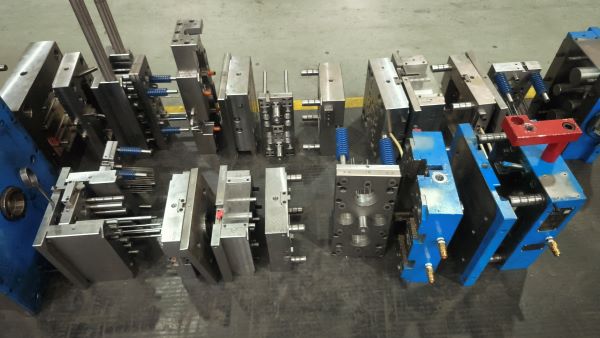
- Metallurgy and Material Options in Custom Injection Tooling
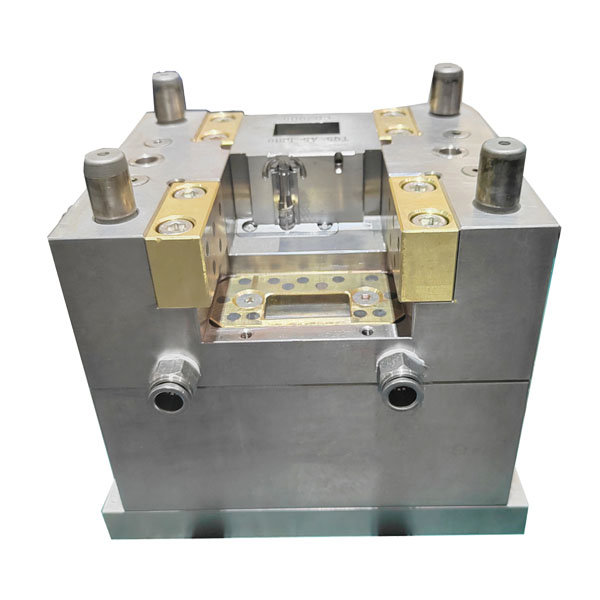
Injection molding tools must withstand extreme mechanical clamping forces, high injection pressures (frequently exceeding 100 MPa), and continuous thermal cycling. To maintain structural integrity without deformation over time, professional mold makers utilize high-grade tool steels, aluminum alloys, or copper-based heat conductors.
A. Tool Steels: The Standard for Mid-to-High Volume Production
Tool steel is the industry standard for high-precision, scalable production due to its high yield strength, wear resistance, and dimensional stability under thermal loads. A professional mold manufacturer china typically selects from five core steel families depending on the part geometry and resin properties:
P20 / 1.2738 / 718H Steel (Pre-Hardened Tool Steel)P20 / 1.2738 / 718H Steel (Pre-Hardened Tool Steel)
- Hardness Range: 30–36 HRC (Rockwell Hardness)
- Tool Life Expectancy: Up to 500,000 cycles
- Technical Profile: Supplied pre-hardened, eliminating the risk of heat-treatment distortion after CNC milling. It offers excellent machinability, stable polishing behavior, and predictable wear resistance.
- Primary Applications: Mid-volume automotive interior/exterior parts, large structural housings, and general consumer electronics processed with non-abrasive polymers (e.g., ABS, PP, PC/ABS).
H13 / 1.2344 / 8407 Steel (Hot-Work Tool Steel)
- Hardness Range: Through-hardened to 48–52 HRC via vacuum heat treatment
- Tool Life Expectancy: 1,000,000+ cycles
- Technical Profile: Highly resistant to thermal fatigue (heat checking) and abrasive wear. It maintains its mechanical properties and resists softening during prolonged exposure to elevated melt temperatures.
- Primary Applications: High-volume engineering plastics, particularly glass-fiber reinforced polymers (e.g., PA66+GF15, PA6+GF30) and demanding structural brackets.
S136 / 1.2083 Steel (Premium Stainless Tool Steel)S136 / 1.2083 Steel (Premium Stainless Tool Steel)
- Hardness Range: Hardened to 48–54 HRC
- Tool Life Expectancy: 1,000,000+ cycles
- Technical Profile: High chromium content provides outstanding resistance to corrosion caused by chemically aggressive, flame-retardant (FR), or outgassing resins (such as PVC). When processed with advanced polishing compounds, it achieves an optical-grade mirror finish.
- Primary Applications: Cleanroom-molded medical devices, IVD diagnostic consumables, clear lenses, and light guides.
420 Stainless Steel
- Hardness Range: 48–52 HRC
- Tool Life Expectancy: High-volume scalable runs
- Technical Profile: Combines the rust prevention of standard stainless alloys with extensive through-hardening capability, making it ideal for tooling run in high-humidity production facilities or stored for extended periods.
- Primary Applications: High-cavitation packaging closures, electronic frames, and multi-cavity precision medical parts.
NAK80 Steel (Pre-Hardened Mirror Finish Steel)
- Hardness Range: 38–42 HRC (Age-hardened)
- Tool Life Expectancy: Up to 500,000 cycles
- Technical Profile: Extremely uniform microstructure allows for consistent EDM (Electrical Discharge Machining) texturing and high-gloss diamond polishing without grain boundary defects.
- Primary Applications: Premium consumer technology housings, cosmetic packaging, and high-aesthetic consumer electronics.
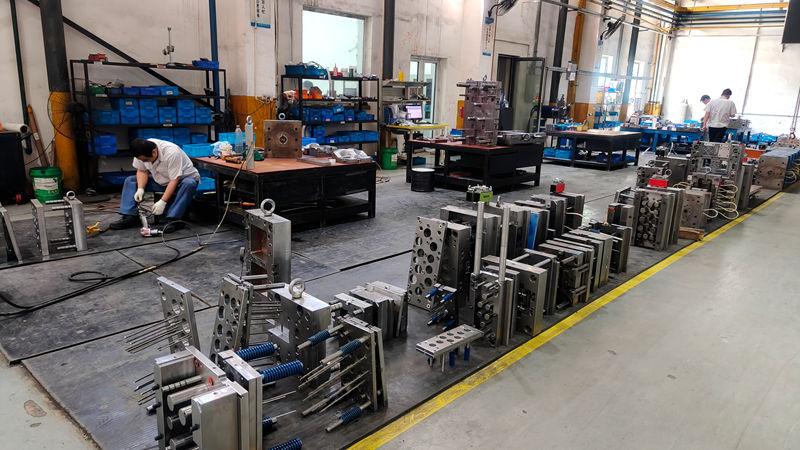
B. Aerospace-Grade Aluminum: Optimized for Prototype and Low-Volume Runs
For rapid product validation or bridge tooling, a mold maker china may recommend premium aluminum alloys over hardened tool steels.
- Common Grades: 7075-T6 and 6061-T6 Aluminum
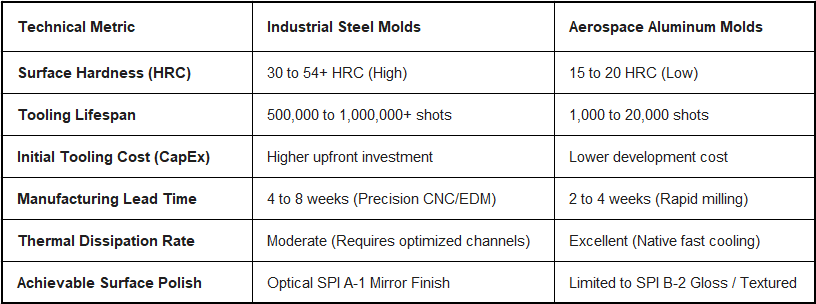
- Tool Life Expectancy: 1,000 to 20,000 cycles
- Technical Profile: High thermal conductivity yields significantly faster cooling rates, which can shorten cycle times. Aluminum blocks can be machined up to 40% faster than steel, reducing upfront tooling costs and lead times.
- Engineering Trade-offs: Lack of surface hardness makes aluminum vulnerable to wear from abrasive resins (like glass-filled nylon) and parting line deformation under high clamping tonnages.
C. Beryllium Copper (BeCu) Inserts: Advanced Thermal Management
Beryllium Copper is an auxiliary alloy deployed strategically within a steel mold core or cavity to resolve localized thermal bottlenecks.
- Thermal Conductivity: Approximately 3 to 4 times higher than standard tool steel.
- Strategic Deployment: Integrated into deep, narrow cores, standing ribs, or surrounding gate locations where standard CNC-drilled cooling channels cannot reach.
- Performance Impact: By rapidly conducting heat away from thick-walled plastic sections, BeCu inserts prevent sink marks, eliminate internal warpage, and can reduce cooling cycle times by up to 20–30%.
2. Selection Matrix: Steel vs. Aluminum Molds
3. How TXS Ensures Tooling Performance and Longevity
As a leading best mold maker in china, Tianjin Xuansheng Technology Co., Ltd. (TXS) utilizes a data-driven, closed-loop engineering workflow to eliminate variances in custom tool building:
- Upfront Predictive Simulation: We deploy advanced mold flow simulation software to analyze thermal distribution and material shrink vectors, eliminating gas traps, weld lines, and warpage risks before cutting certified tool steel.
- Sub-Micron Machining Infrastructure: Our climate-controlled toolroom operates high-precision equipment, including high-speed CNC machining centers and Makino mirror EDM machines, to achieve tooling tolerances within ±0.005 mm.
- Advanced Digital Assembly: TXS integrates 3D blue-light scanning and Color Tolerance Management (CTM). This virtual and physical fitting system minimizes manual bench adjustments, ensuring absolute consistency across multi-cavity tools.
- Metrology and Inspection: All finished tools undergo 100% dimensional inspection using Hexagon Coordinate Measuring Machines (CMM). Every mold is delivered with steel certification sheets, heat-treatment records, and DFM validation reports.
Choosing a reliable china mold company protects your capital investment and ensures stable, high-yield mass production. Contact the TXS engineering department today to discuss your next injection molding project, request a technical DFM evaluation, or receive a competitive quotation.
Email: [email protected]
Website: www.molds-maker.com