
Why Are Injection Molds So Expensive? Understanding Tooling Cost Factors
When sourcing custom plastic parts, many international procurement managers and engineers are often surprised by the upfront price tags of tooling. Whether you are developing components for the automotive, medical, or consumer electronics industry, understanding the cost factors behind injection mold pricing can help you optimize your capital expenditure.
As a premier china mold manufacturer, Tianjin Xuansheng Technology Co., Ltd. (TXS) specializes in high-precision mold manufacturing and cost-effective injection molding solutions. In this article, we’ll break down the key engineering reasons why injection molds require significant investment and how you can optimize your sourcing strategy.
1. Precision Engineering & Sub-Micron Tolerances
An injection mold is not an off-the-shelf product; it is a highly custom-engineered machine tool designed for reliable mass production. Achieving micron-level accuracy ($\pm$5μm) inside a steel block requires rigorous engineering overhead:
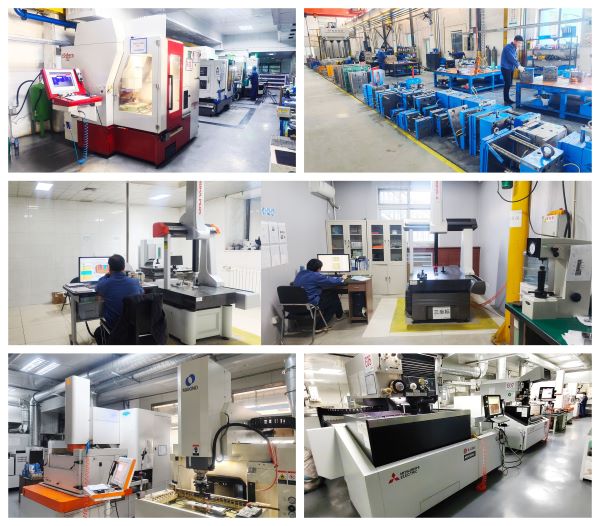
- State-of-the-Art Toolroom Machining: A top-tier china mold factory like TXS utilizes advanced CNC machines, high-speed milling, and EDM equipment imported from Germany, Switzerland, and Japan.
- Predictive Mold Flow Simulation: Before cutting steel, we conduct Moldex3D CAE mold flow simulation to analyze "Fill + Pack + Warp" phases upfront. This predicts and eliminates potential defects like air traps, weld lines, and product warpage.
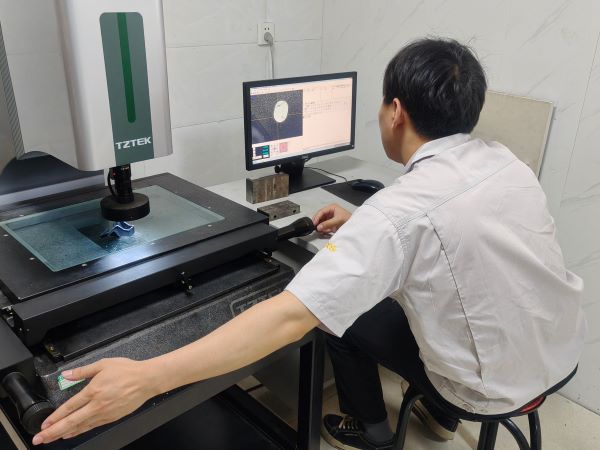
- Multi-Stage Metrology Control: We leverage world-class Swedish Hexagon Coordinate Measuring Machines (CMM), 3D scanners, and vision systems to validate dimensional layouts.
Investing in precision engineering at the source prevents costly production defects, tool re-work, and excessive scrap rates later on.
2. Premium Tool Steels Built for Lifespan Longevity
Injection molds must withstand extreme mechanical stresses, clamping pressures, and thermal cycling—often running 24/7 to produce millions of shots. Choosing the correct, high-grade tool steel determines the durability and lifespan of your mold:
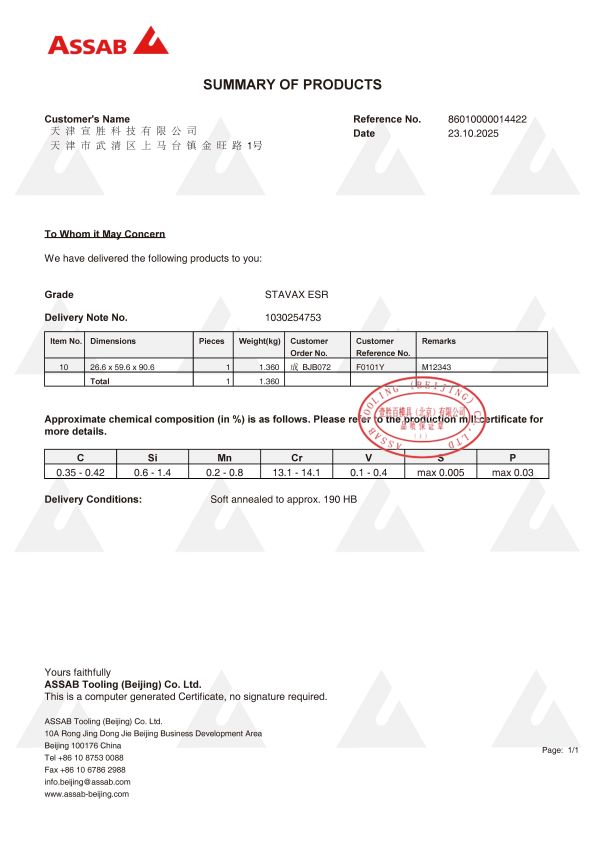
- Hardened Steel (H13, S136, 1.2083, 1.2344, 8407): Essential for high-volume, long-life production runs. S136 provides excellent corrosion resistance and can be highly polished for optical or transparent parts.
- Pre-Hardened Steel (P20, 718H): Ideal for medium-volume production, offering a balanced trade-off between price and longevity.
- Beryllium Copper Inserts: Integrated into deep cores or rib areas where standard cooling lines cannot reach, drastically improving cooling thermal efficiency and reducing overall cycle times.
At TXS, we source premium steel from certified suppliers in Germany and Japan, ensuring that our production-grade tools routinely achieve a lifespan of over one million cycles.
3. Advanced Digital Tooling & Manufacturing Workflows
Creating complex mold geometries with flawless surface finishes relies on advanced machining workflows that bridge traditional craftsmanship with automated technology:
- High-Speed CNC Machining (Röders): Delivers exceptional surface finishes and precise electrode milling.
- Mirror EDM & Wire EDM (Makino, Mitsubishi, Charmilles): Used to form deep, intricate cavities, thin structural ribs, and precise textures that cannot be machined with traditional cutting tools.
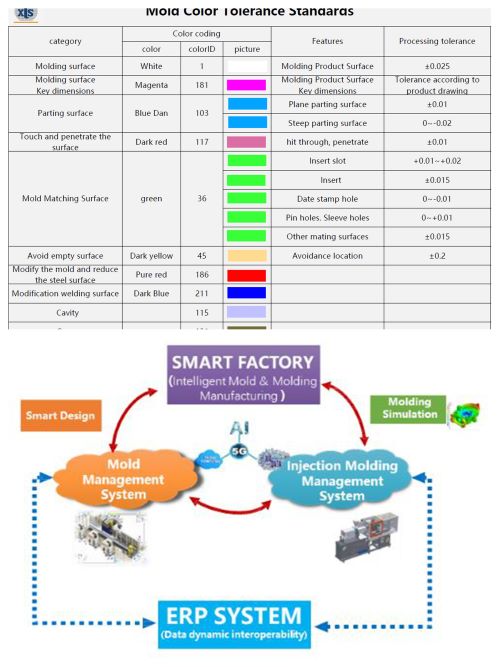
- Digital Fitter Technology: TXS pioneered a Digital Fitter Workflow that translates manual bench work into digital CAD/CAM collaboration. By utilizing 3D blue-light scanning and Color Tolerance Management (CTM), we maximize "T-Zero" trial success and ensure absolute structural repeatability across multi-cavity tools.
4. Part & Design Complexity (Sliders, Lifters, and Cavities)
The complexity of your component design directly dictates the mechanical architecture of the mold. The more features a part has, the more complex—and expensive—the tool becomes:
- Multi-Cavity Layouts: While a single-cavity tool is more economical upfront, an 8-cavity or 16-cavity mold drastically multiplies output and lowers the per-part cost during high-volume production. However, it requires highly balanced runner channels and gating systems.
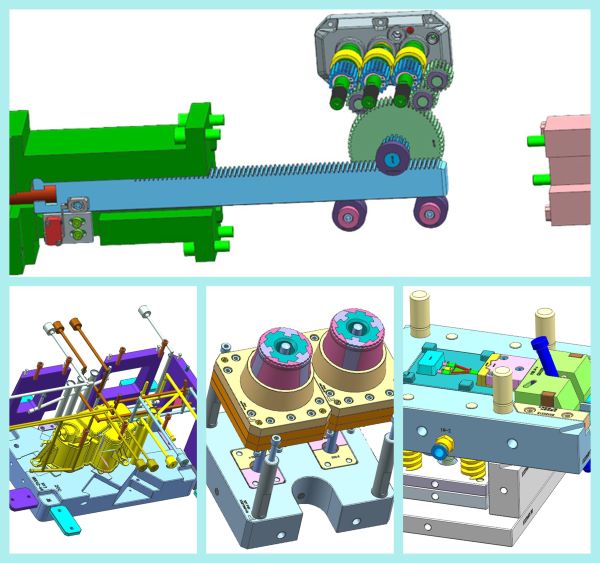
- Undercuts & Side Actions: If a part features side holes, clips, or complex tabs, the mold cannot open straight. It requires complex mechanical mechanisms like slide blocks (sliders), lifters, or hydraulic cores, which significantly increases manufacturing time and tooling cost.
- Hot Runner Systems (Yudo, Synventive, Mold-Masters): Implementing a hot runner system increases initial capital expenditure but dramatically reduces material waste (eliminating scrap runners) and shortens production cycle times.
5. Extensive Testing, Validation, and CMM Inspection
Before a mold is signed off for mass production, it must pass a rigorous validation framework to prove its mechanical reliability:
- T-Zero Mass Production Validation: Initial mold trials (T0/T1) are performed to verify part aesthetics and mechanical function before full-scale deployment.
- Injection Parameter Optimization: Utilizing real-time data and sensors to map out the ideal injection speed, packing pressure, and cooling parameters.
- Full Dimensional Layout: Parts are audited via Hexagon CMM 打点检测 (Coordinate Measuring Machine) to ensure all critical tolerances match the customer's 2D/3D specifications perfectly.
6. Industry-Specific Compliance & Quality Certifications
Different industries demand distinct regulatory standards, and a professional best mold maker in china must adapt the tool validation accordingly:
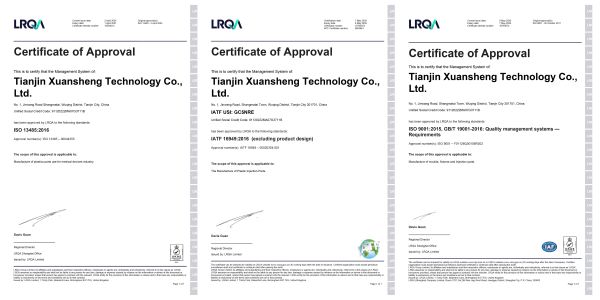
- Automotive Sector (LRQA: IATF 16949): Molds must produce parts with zero-defect structural integrity, such as complex automotive seat components, instrument clusters, or bumpers.
- Medical & Life Sciences (LRQA: ISO 13485): Demands specialized tool designs suitable for medical-grade polymers and cleanroom manufacturing environments (Class 100,000 cleanrooms) for components like IVD diagnostic consumables or syringes.
- Smart Home Appliances & Electronics (LRQA: ISO 9001): Demands flawless cosmetic surfaces, tight clip tolerances, and anti-static or flame-retardant material processing.
Pro Tips: How to Optimize Your Injection Tooling Investment?
While high-quality injection molds require a major initial investment, smart engineering choices can significantly lower your overall costs:
- Engage in Early DFM (Design for Manufacturing): Partner with your mold maker china early. Modifying slight draft angles, optimizing wall thickness variations, or simplifying complex clips can eliminate the need for expensive sliders or lifters.
- Utilize Professional Mold Flow Analysis: Eliminate tool warpage, gas traps, and weld line defects digitally before cutting steel, saving thousands of dollars in physical tool modifications.
- Choose a Single-Source Engineering Partner: Working with a one-stop contract manufacturer like TXS—who handles everything from mold design, precision tooling, and injection molding to secondary operations like ultrasonic welding and laser engraving—guarantees optimal efficiency, zero communication lag, and full supply chain accountability.
Partner with a Trusted Mold Manufacturer in China
Are you evaluating a reliable china mould company for your upcoming project? At Tianjin Xuansheng Technology Co., Ltd. (TXS), we provide:
- High-precision tool design and mold building backed by German Röders CNC & Makino EDM hardware.
- Decades of multi-industry expertise across Automotive, Medical, Electronics, and Smart Home Appliance sectors.
- End-to-end capabilities: from DFM, Moldex3D simulation, tool building, to automated mass production.
Let us bring your product designs to life with unmatched precision, speed-to-market, and cost-effectiveness. Contact our engineering team today for a free, detailed DFM feedback and competitive quote!
Email: [email protected]
Website: www.molds-maker.com