
In precision injection molding, high-performance materials like 50% glass fiber-reinforced polybutylene terephthalate (PBT-GF50) are widely specified for their exceptional mechanical strength and thermal stability. However, molding PBT-GF50 presents significant processing hurdles, including fiber orientation warpage, glass fiber floating (surface exposure), and severe cosmetic constraints.
For critical components like spray painting fixtures, any surface defects—such as ejector pin marks, pronounced parting lines, or minor flatness deviations—directly compromise the quality of the subsequent coating process. As a leading china mold manufacturer, we have successfully engineered a custom tooling solution that completely eliminates these common defects.
1. The Engineering Challenge: Precision & Cosmetic Perfection
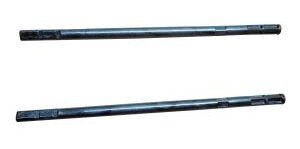
Molding a slender, highly reinforced component with a geometry of Ø12 x 267 mm poses three major difficulties for standard tooling:
- Fiber Floating & Warpage: The anisotropic shrinkage of PBT-GF50 often leads to severe warpage, while the rapid cooling of the resin can cause glass fibers to freeze at the surface, creating a rough, uneven texture.
- Zero-Defect Surface Requirement: Because these components function as spray painting fixtures, the A-surface must be completely free of ejector pin marks, witness marks, or flash.
- Extreme Flatness Tolerances: Maintaining perfect linearity across a long, narrow structural envelope of 267 mm is incredibly difficult with conventional mold designs. Finding an experienced mold maker china capable of managing these tolerances is essential for project success.
2. Custom Engineering & Tooling Solutions
To achieve a defect-free surface finish and meet the tight flatness requirements, our china mold factory implemented a series of advanced tooling strategies:
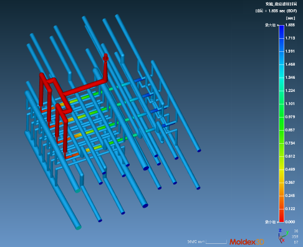
- Scientific Mold Flow Simulation: At the initial DFM stage, we utilized advanced mold flow analysis to optimize gate positioning and melt front velocity. This ensured a balanced fill pattern, preventing shear-induced material degradation and minimizing internal molding stresses.
- High-Temperature Thermal Management: To combat glass fiber floating and warpage, we optimized the conformal cooling channels to maintain uniform, elevated mold temperatures. This high-temperature mold process allows the polymer matrix to fully relax before solidifying, packing the glass fibers beneath a rich, resin-only surface layer. This ensures a pristine, paint-ready cosmetic finish.
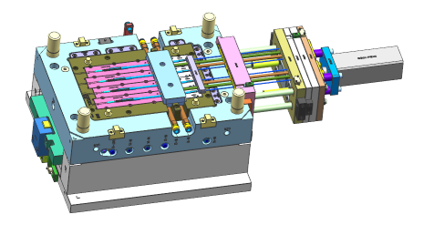
- Innovative Side Hydraulic Cylinder Ejection: To satisfy the client's strict "no ejector pin marks" mandate, we pioneered a specialized demolding mechanism. Instead of using traditional ejector pins on the cosmetic face, we engineered a side ejection system actuated by hydraulic cylinders. This custom setup pulls the part from its non-cosmetic faces, completely eliminating pin marks and minimizing parting line visibility.
3. Proven Performance: Ready for Mass Production at T2
By combining advanced thermal control with custom kinematics, our tooling successfully achieved mass production approval during T2 trials. The client reported outstanding results:
- Superior Surface Quality: A perfectly smooth, defect-free surface that requires zero secondary manual prep before spray painting.
- Excellent Flatness: Perfect dimensional stability across the entire 267 mm span.
- Reduced Production Costs: Eliminating post-mold manual finishing significantly lowered the overall per-part cost.
As one of the best mold makers in china , our china mold company is committed to delivering highly engineered solutions for complex, high-performance thermoplastics.🤝 Partner with a Premier Mold Manufacturer in China
From initial mold flow simulation to high-precision mass production, we provide comprehensive, one-stop molding services for demanding industrial and automotive applications.
Email: [email protected]
Website: www.molds-maker.com