
Is 3D Printing Better Than Injection Molding? A Hardcore Manufacturing Comparison
In modern hardware product development, engineering teams and procurement managers frequently face a critical architectural decision: Is 3D printing better than injection molding?
The answer is never a simple binary. It requires a deep balancing act across key industrial metrics: total production volume, raw material mechanical properties, dimensional precision tolerances, and amortization costs.
As a premier china mold manufacturer, Tianjin Xuansheng Technology Co., Ltd. (TXS) brings over two decades of high-precision tooling and contract manufacturing experience to dissect these two processes, helping you identify the most cost-effective path for your next product launch.
1. Demystifying the Technologies: Additive vs. Subtractive Tooling
3D Printing (Additive Manufacturing)
3D printing builds three-dimensional components layer by layer directly from a 3D CAD model. Utilizing methodologies like Stereolithography (SLA), Selective Laser Sintering (SLS), or Fused Deposition Modeling (FDM), it excels at rapid design iterations and geometrically complex structures without the need for physical tooling setup.
Injection Molding (High-Volume Mass Production)
Injection molding forces molten engineering polymers under extreme pressures into a precision-machined steel or aluminum cavity. As a leading china mold factory, TXS designs and engineers custom tooling to produce hundreds of thousands of structurally identical, flash-free plastic parts with absolute repeatability and sub-micron dimensional control.
2. Hard Engineering Comparison Metrics
(1) Production Volume & Amortization Thresholds
-
Low-Volume Tooling (1 to 1,000 units): 3D printing completely bypasses upfront tooling investments. For low-volume validation or initial market testing, additive manufacturing keeps capital expenditure at zero.
-
High-Volume Mass Production (10,000+ units): Injection molding becomes overwhelmingly superior. Once a custom mold is cut, the per-unit cycle time drops to seconds, and the tool cost is amortized across millions of parts, driving the individual unit cost to fractions of a dollar.
(2) Comprehensive Cost Breakdown
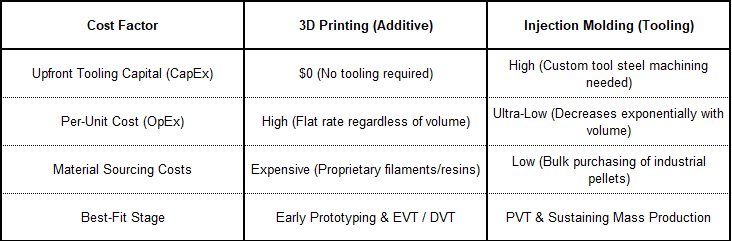
(3) Engineering Lead Time & Speed to Market -
Prototyping Speed: 3D printing can output a physical design iteration within hours. Engineers can identify physical fitment defects, modify the CAD, and print a revised version on the same day.
-
Scalable Throughput: While a professional mold maker china requires a few weeks for tooling fabrication, hardening, and T-Zero validation trials, the actual production throughput is unmatched once deployed. An optimized multi-cavity mold can produce tens of thousands of parts per day.
(4) Dimensional Precision & Cosmetic Surface Quality -
Injection Molding Superiority: Injection molds achieve extreme tolerances (±5μm) and flawless surface finishes straight out of the tool. For complex automotive seat plastic components, airtight medical housings, and high-tier consumer electronics, injection molding ensures zero mechanical interference during automated assembly.
-
3D Printing Limitations: Additive parts frequently exhibit visible layer lines and anisotropic mechanical weakness along the Z-axis. Achieving a commercial finish requires costly secondary post-processing like manual sanding, vapor smoothing, or painting.
(5) Material Performance & Mechanical Properties -
Industrial Thermoplastics: Injection molding natively supports the full spectrum of engineering-grade polymers, including ABS, Polycarbonate (PC), Polypropylene (PP), Nylon (PA6/PA66), and high-performance PEEK. These materials maintain uniform isotropic mechanical strength, thermal stability, and flame retardancy.
-
Additive Resins: 3D printing materials often mimic the properties of real plastics but fail to match their long-term UV resistance, tensile strength, and impact durability under real-world load-bearing conditions.
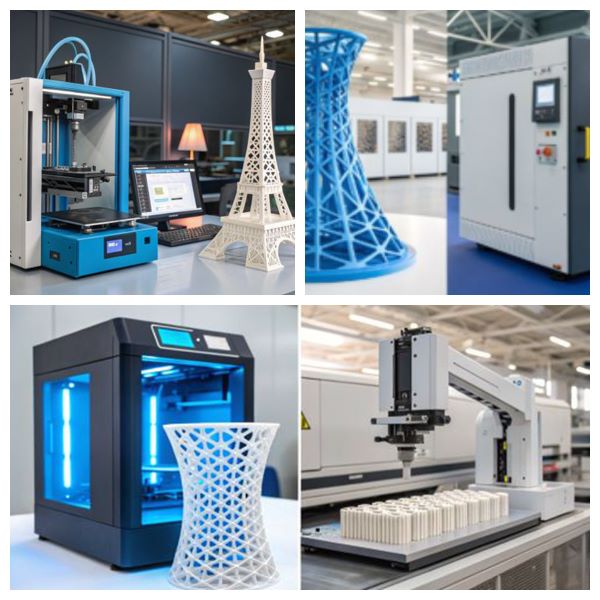
3. Decision Matrix: Which Method Fits Your Sourcing Needs?
Select 3D Printing If:
-
You are in the early R&D phase and need functional aesthetic models for verification.
-
Your total lifetime production volume is under 1,000 units.
-
The design features internal geometries or hollow channels impossible to release from a physical mold core.
Select a Professional Mold Manufacturer in China If: -
Your market demand requires scaling into thousands or millions of identical components.
-
The product demands strict industry compliance (e.g., IATF 16949 for automotive or ISO 13485 for medical devices).
-
Real-world application requires high tensile strength, precise snap-fits, and tight structural tolerances.
-
You need to minimize long-term per-unit manufacturing costs.
4. End-to-End Solutions: How TXS Bridges the Gap
At Tianjin Xuansheng Technology Co., Ltd. (TXS), we don't just build molds—we secure your global supply chain integrity. We offer a hybrid approach, supporting our clients with 3D printing for early-stage prototyping and seamlessly transitioning into world-class injection molding when you are ready to scale.
Why TXS is Rated the Best Mold Maker in China:
-
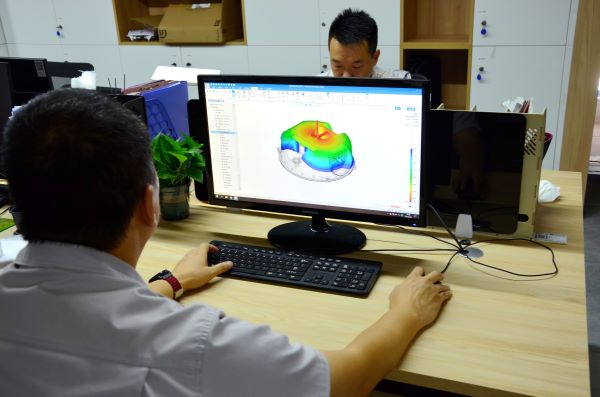
Predictive DFM Simulation: We utilize advanced Moldex3D CAE mold flow analysis to simulate plastic flow behavior, eliminating weld lines, air traps, and product warpage before any steel is cut.
-
Sub-Micron Tooling Hardware: Our toolroom features elite CNC milling centers and mirror EDMs from Germany (Röders) and Japan (Makino).
-
Advanced Digital Fitter Workflow: By combining traditional bench craftsmanship with 3D blue-light scanning and Color Tolerance Management (CTM), we eliminate human error and maximize "T-Zero" trial success.
-
Metrology & Validation Compliance: All parts undergo comprehensive full-dimensional layout audits via Swedish Hexagon Coordinate Measuring Machines (CMM) to ensure exact tolerance matching.
-
Certified Manufacturing Environments: TXS holds active certifications for ISO 9001, IATF 16949 (Automotive), and ISO 13485 (Medical Devices), operating Class 100,000 cleanrooms for sterile component production.
Final Thoughts
3D printing and injection molding are complementary pillars of modern manufacturing. Choosing the right china mould company ensures that your product transitions from a digital concept to a high-volume market success without encountering costly re-tooling delays.
Ready to optimize your manufacturing costs? Contact the TXS engineering team today for expert DFM feedback and a transparent, competitive tooling quotation.
📧 Email: [email protected]
🌐 Website: www.molds-maker.com