
In the medical device and laboratory consumables sector, molding optical-grade components with high-density micro-features tests the limits of fluid dynamics. As a recognized pioneer in plastic mold china, our facility recently developed a highly complex high precision mold for a medical-grade PC Petri dish (φ92 *17 mm). The component features over 1000 integral honeycomb micro-holes, with an extreme nominal wall thickness of just 0.3 mm at the apex, requiring a flawless SPI A1 mirror finish across a 1*2 cavity layout.
Tooling engineers tasked with high-density multi-cavity micro-structures in polycarbonate (PC) face intense processing risks:
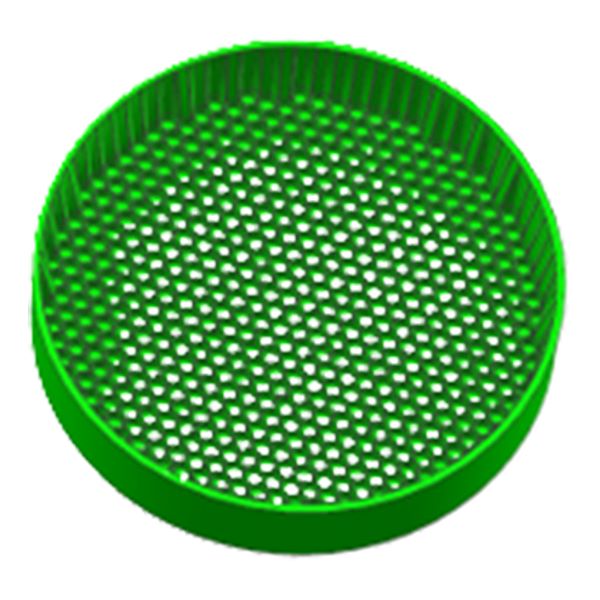

To secure flawless geometric execution and reinforce our track record as the best mold maker in china, our technical team abandoned standard engineering assumptions for a fully quantified protocol:
1.Micro-Rheological Customization via Moldflow Simulation
Prior to tool design approval, we executed micro-fluidic moldflow simulation analysis to map out the shear stress variations across the 0.3 mm thin-wall grids. By optimizing the sub-gate delivery paths and embedding micro-venting channels along the splitting inserts, we stabilized the advancing flow front. This ensured that air trapped within the honeycomb matrix vents instantly, preventing short shots and volatile gas burning.
2.Closed-Loop Electrode Machining (≤0.005 mm) and Mirror EDM
To maintain uniform wall profiles across all 1000+ micro-features, graphite/copper electrodes were processed on ultra-precision CNC centers maintaining a positioning tolerance within 0.005mm. Each electrode underwent structured non-contact 3D scanning verification before firing. Low-wear Mirror EDM (Electrical Discharge Machining) sequences were then deployed, achieving an unblemished, high-transparency optical finish while keeping structural deviations non-existent.
3.Precision Control via All-Electric Injection Processing
To counter the intense flow resistance of thin-wall PC molding, production runs were assigned to high-speed all-electric injection molding machines. The millisecond-level response time of the electric servo-drives maintains a linear velocity-to-pressure switchover, preventing flashing while flawlessly filling the 0.3mm micro-gaps with complete weight consistency.
By eliminating engineering variables through predictive data, this advanced china mold manufacturer project achieved immediate T1 production readiness. The Petri dish optical transmission and structural integrity completely satisfied medical-grade lab audits at the first trial, allowing the client to bypass costly modification loops and launch ahead of schedule.
High-Precision Injection Molding & Mold Manufacturing - One-Stop Custom Solutions
Hello, This is Isabella from TXS-Mold, How can I assist you today?
Chat with us on WhatsApp。
🟢 Online | Privacy policy