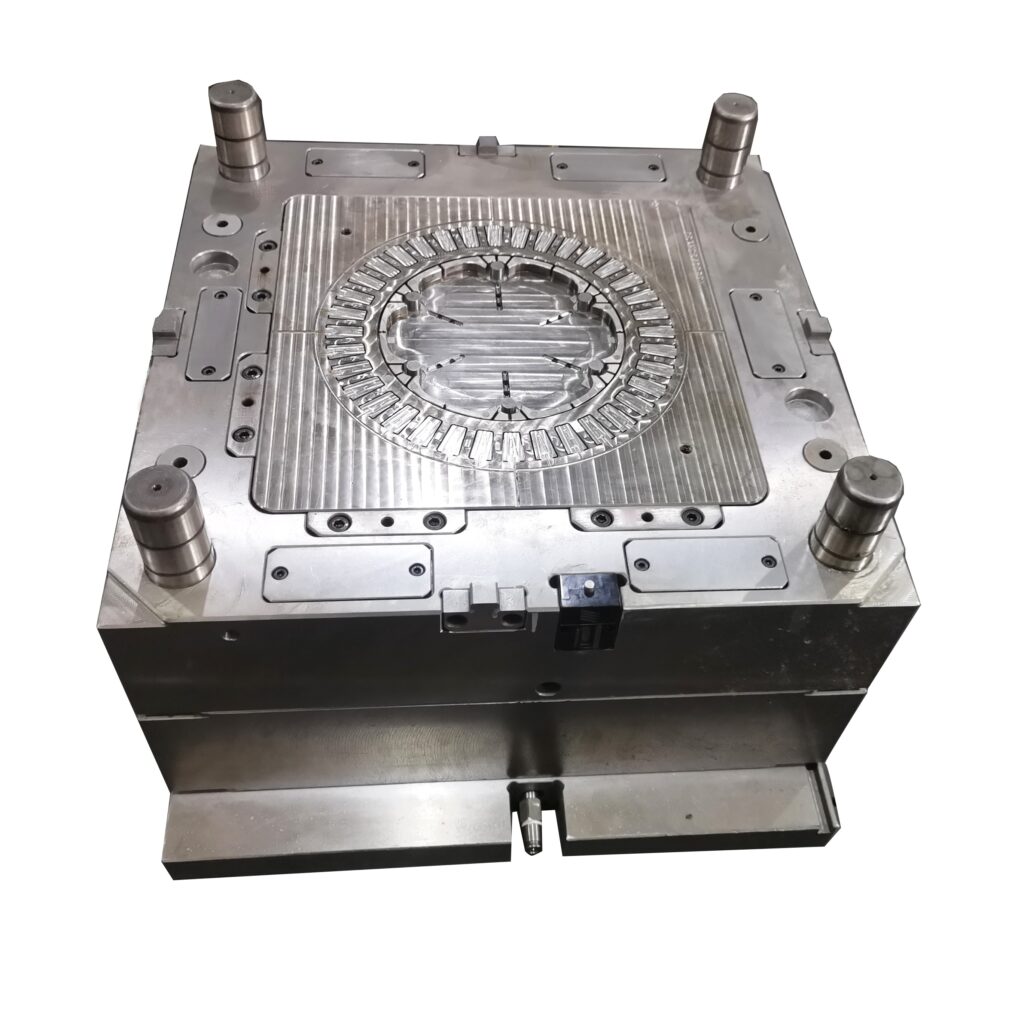
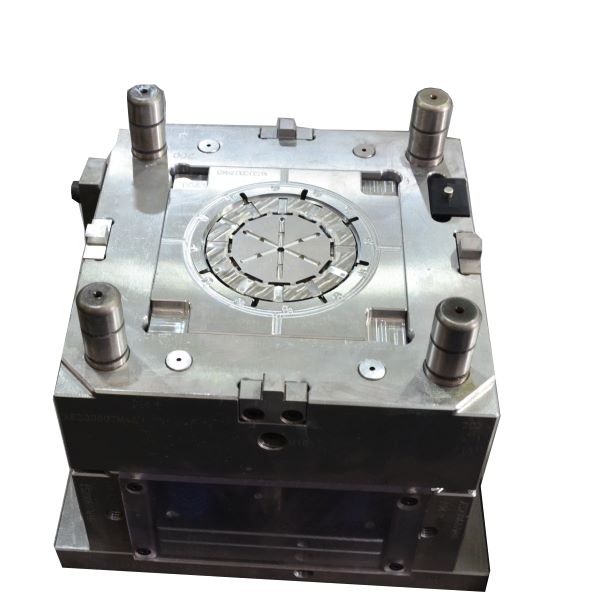
Audi 32mm Stator: A Flawless Mold Solution for Cumulative Tolerances in In-Mold Metal Sheet Inserts
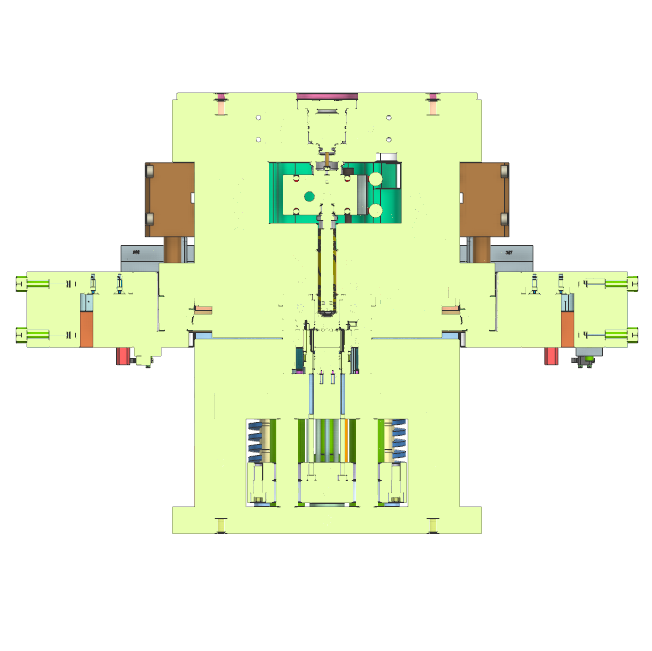
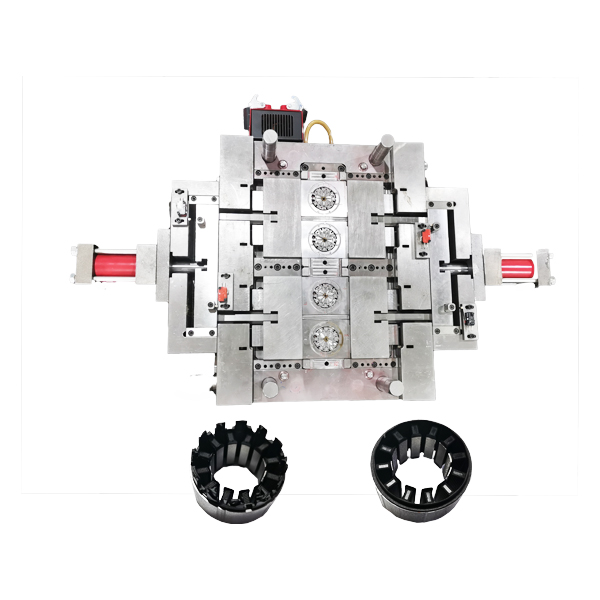
In the manufacturing of high-end automotive motors, the quality of precision stator components directly dictates overall vehicle dynamic performance and electrical reliability. Recently, our engineering division successfully developed and delivered a high-precision injection mold for an Audi 32mm stator with internal metal inserts, perfectly resolving industry-wide bottlenecks such as massive insert tolerances, plastic flash, and slider crash-damage.
🔍 Customer Challenges & Pain Points
The component’s complex geometry and material specifications presented severe technical hurdles for standard tooling:
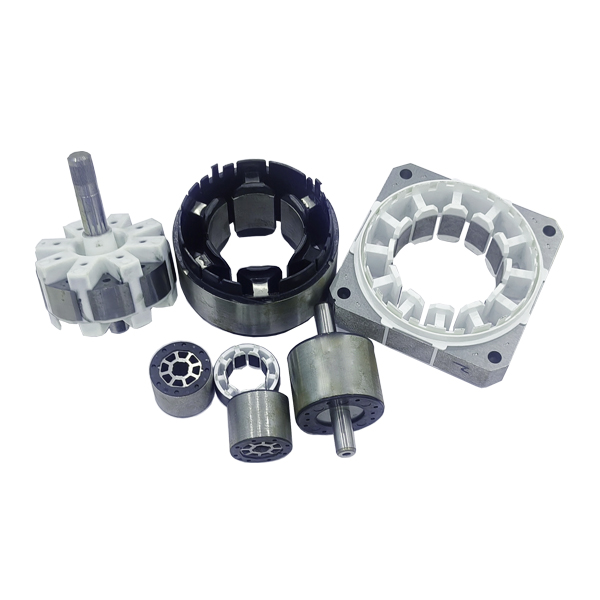
Massive Cumulative Insert Tolerances: The internal metal insert is constructed by thermal-pressing N-sheets of 0.2mm thick iron plates together. Due to cumulative processing variations, the actual tolerance range spans up to ±0.5mm. In conventional molds, this large dimensional deviation inevitably results in the mold slider crushing or scratching the metal inserts, leading to catastrophic tool damage and heavy flash.
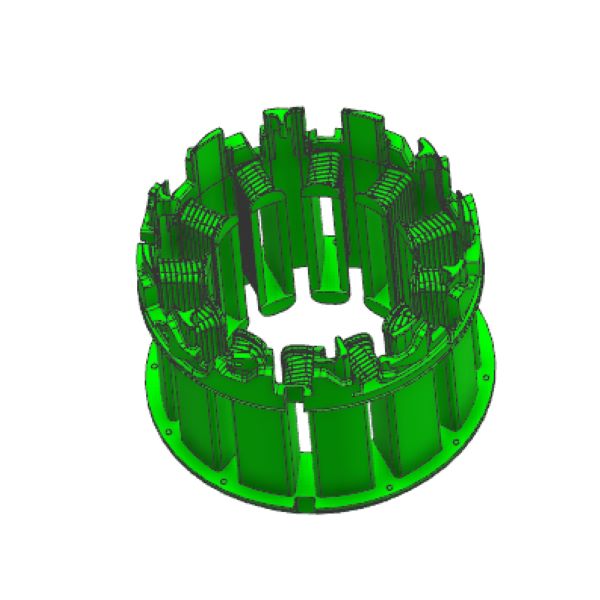
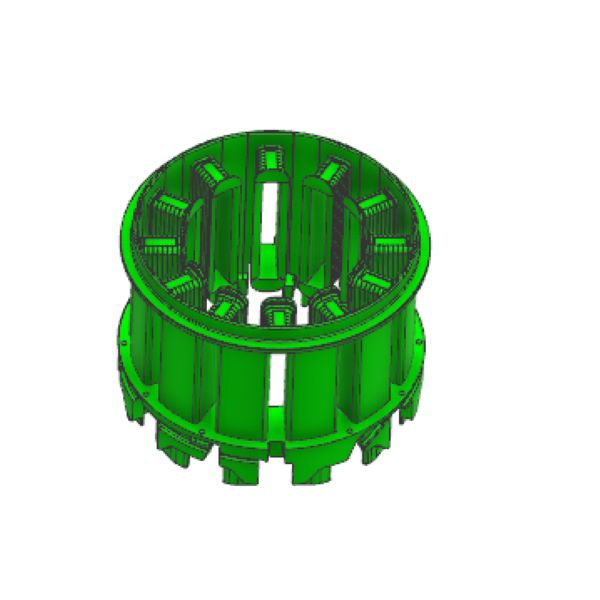
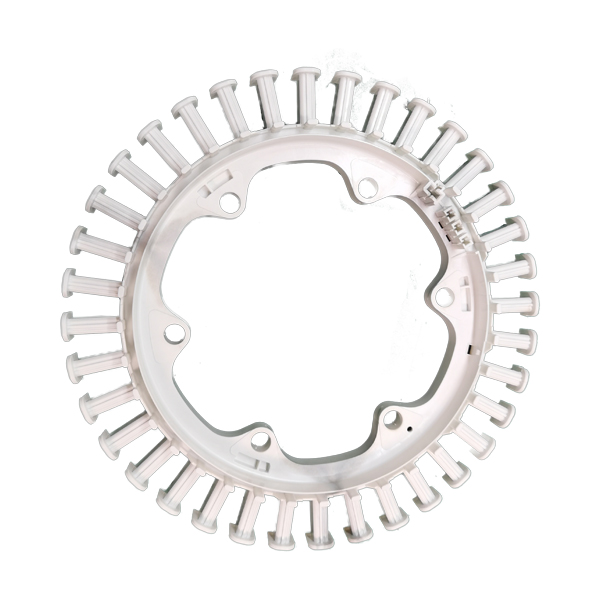
Zero-Flash and Complex Undercut Requirements: Molded from PA66+GF15 (glass-filled nylon) with dimensions of φ 87 × 67mm, the part features complex peripheral undercuts. The client demanded absolute zero flash on the plastic sections, alongside guaranteed protection preventing the moving sliders from gouging or damaging the pre-loaded metal inserts.
⚙️ Our Innovative Mold Solution
To completely bridge the gap between high-tolerance metal inserts and zero-flash precision molding, our senior engineering team abandoned conventional tooling concepts and engineered a proprietary mechanism:
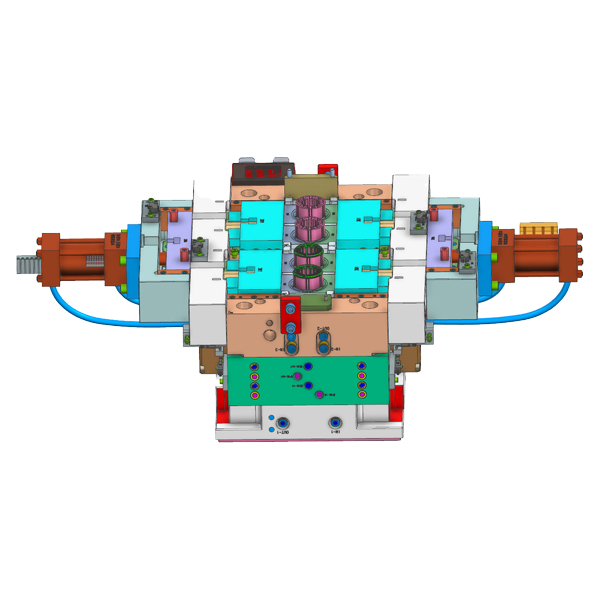
To accommodate the ±0.5 mm cumulative tolerance of the iron sheets, we integrated a high-sensitivity in-mold elastic floating positioning mechanism. When the stamped metal insert is loaded into the tool, this mechanism dynamically and automatically compensates for dimensional variations in real-time. This completely eliminated the traditional pain points of slider collisions, material overflow, or part pinching while securely locking the inserts in place prior to injection.
Optimized Rheological Balancing and Pressure-Seal Design:
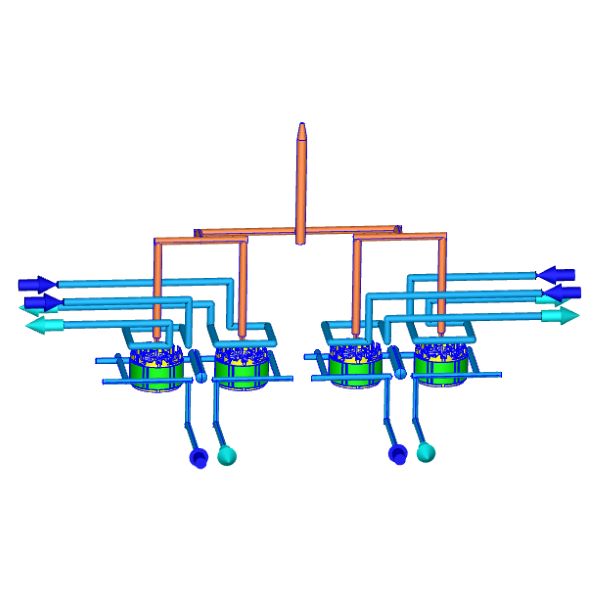
Accounting for the shrinkage and flow behavior of PA66+GF15, we executed comprehensive rheological simulations prior to steel cutting. By strategically optimizing gate locations and venting arrays, the polymer melt encapsulated the iron inserts smoothly and evenly. This achieved flawless formation of the peripheral undercuts while restricting parting line flash to microscopic levels, fully satisfying Audi’s strict automotive quality audits.
🏆 Results & Production Value
The mold achieved smooth tool trial validation and sign-off at the T3 stage, transitioning immediately into full serial production. All component dimensions and structural integrity parameters fully exceeded Audi’s technical specifications.
Buoyed by this breakthrough in managing high-tolerance in-mold metal inserts, the client not only secured stable mass production for this Audi stator program but subsequently awarded us consecutive contracts for other Audi stator series molds and Hyundai stator series molds.